

Every time a powerful new AI model -- like Google's MedGemma 27B or MedSigLIP -- hits the headlines, it's followed by the same question: Is this the end of the radiologist? Social media feeds, op-eds, and industry commentary continue to sound the alarm: Soon, machines will read every x-ray and MRI, rendering human interpretation obsolete.
Take a peek inside your nearest hospital or radiology department, though, and you’ll see a very different story unfolding.
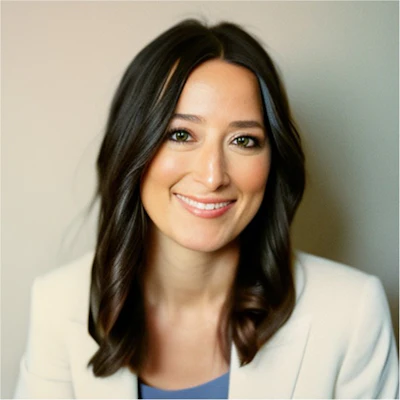 Angela Adams, CEO of Inflo Health.
Despite the hype, there's no meaningful evidence that AI is displacing radiologists. In fact, the opposite is true. The number of practicing radiologists has continued to rise, and demand is outpacing capacity in part because of technology advancements that are increasing the number of radiology studies. In this changing and demanding landscape, AI is becoming the radiologist’s partner. As global headlines highlight, AI isn’t pushing physicians out -- it's helping them do their jobs more efficiently, more accurately, and with greater consistency.
Clinical studies echo this reality: AI enhances performance, and human oversight is irreplaceable.
AI shines when it comes to pattern recognition. It can surface subtle abnormalities, prioritize high-risk studies, and automate repetitive tasks that often burden clinical workflows. When paired with expert oversight, it can do the following:
In short, AI can take on the volume and the scale -- but radiologists bring the value and expertise.
Despite the hype, even the most sophisticated algorithms fall short of what clinicians bring to the table. AI doesn't understand the context behind a scan -- machines don’t know if a finding is significant for this patient at this moment. It can't weigh a patient’s history or comorbidities. It lacks accountability. It is incapable of empathy and can’t have a nuanced conversation with a patient or family receiving hard news.
That’s why the "human in the loop" isn't optional -- it's the foundation of responsible care. Clinicians serve to integrate human experience and expertise with machine-driven insights. They are interpreters who take what the AI delivers and translate it into a meaningful treatment path that advances patient care. The best outcomes don’t come from AI or humans alone -- they come from partnership. Radiologists who adopt AI as a tool are experiencing measurable improvements: faster turnaround times, increased accuracy, and fewer missed follow-ups. In environments that operationalize AI thoughtfully, patient safety improves. Errors decline. Trust builds.
The real risk lies not in AI replacing radiologists but in overselling its capabilities, eroding trust, and enabling misuse. If we treat AI like an infallible decision-maker, we risk overreliance, bias, and harm.
The fear of replacement distracts us from the real work ahead: designing systems that elevate human judgment -- not bypass it -- and ensuring every advancement strengthens the bond between patient and provider.
AI in radiology isn't about choosing between people and machines. It's about building workflows where each makes the other stronger. We don't need to fear the future of AI in medicine. We need to shape it, intentionally, responsibly, and always with the clinician and the patient in mind.
Angela Adams is CEO of Inflo Health.
The comments and observations expressed herein do not necessarily reflect the opinions of AuntMinnie.com, nor should they be construed as an endorsement or admonishment of any particular vendor, analyst, industry consultant, or consulting group.
Whether you are a professional looking for a new job or a representative of an organization who needs workforce solutions - we are here to help.